

Brochure
NGPS is made accessible with sequencing and library prep kits. Our end-to-end solution includes everything you need to prepare libraries, sequence proteins, and analyze results. Every lab can quickly and accurately identify proteins with a simple workflow that makes data interpretation and protein insights accessible.
NGPS identifies proteins using unique kinetic signatures based on the binding kinetics of amino acid recognition events. Library preparation and sequencing kits contain reagents to digest and functionalize proteins and immobilize peptides on sequencing chips.
Platinum® Pro sequences individual peptides by capturing the florescent signal from each N-terminal amino acid (NAA) binding event. Aminopeptidases cleave each N-terminal amino acid, exposing the next for recognition, and the process repeats until the whole peptide is sequenced.

Prepare Peptide Barcodes For Single-Molecule Sequencing

Sequence Peptide Barcodes With Single-molecule Precision
Analyze Multiplexed Barcodes With Relative Quantitation

The Library Prep Kit offers reagents and workflow to accommodate a broader range of protein characteristics for sequencing.

Reduces the required sample input fivefold

Target protein guidelines maximize insights from challenging samples

Sequencing-ready libraries with less than two hours hands-on time

The Sequencing Kit enables researchers to look deeper at protein variation with improved peptide alignments and deeper coverage.

The power of our single-amino acid resolution platform is amplified with the addition of aspartic acid (D) recognition. Explore protein functions in health and disease

Accelerating results with less hands-on time and AI-powered analysis tools for elevated protein insights, making protein sequencing more accessible.

Our latest recognizer set expands access to protein characterization and amino acid variation to accelerate your next breakthrough.

With the power of the V3 Sequencing Kit, researchers can look deeper at protein variation with improved peptide alignments and deeper coverage. Protein identification and inference powered by kinetic signatures is amplified by the addition of aspartic acid (D) recognition, our kinetic database, and AI-powered software model driving confidence for protein identification
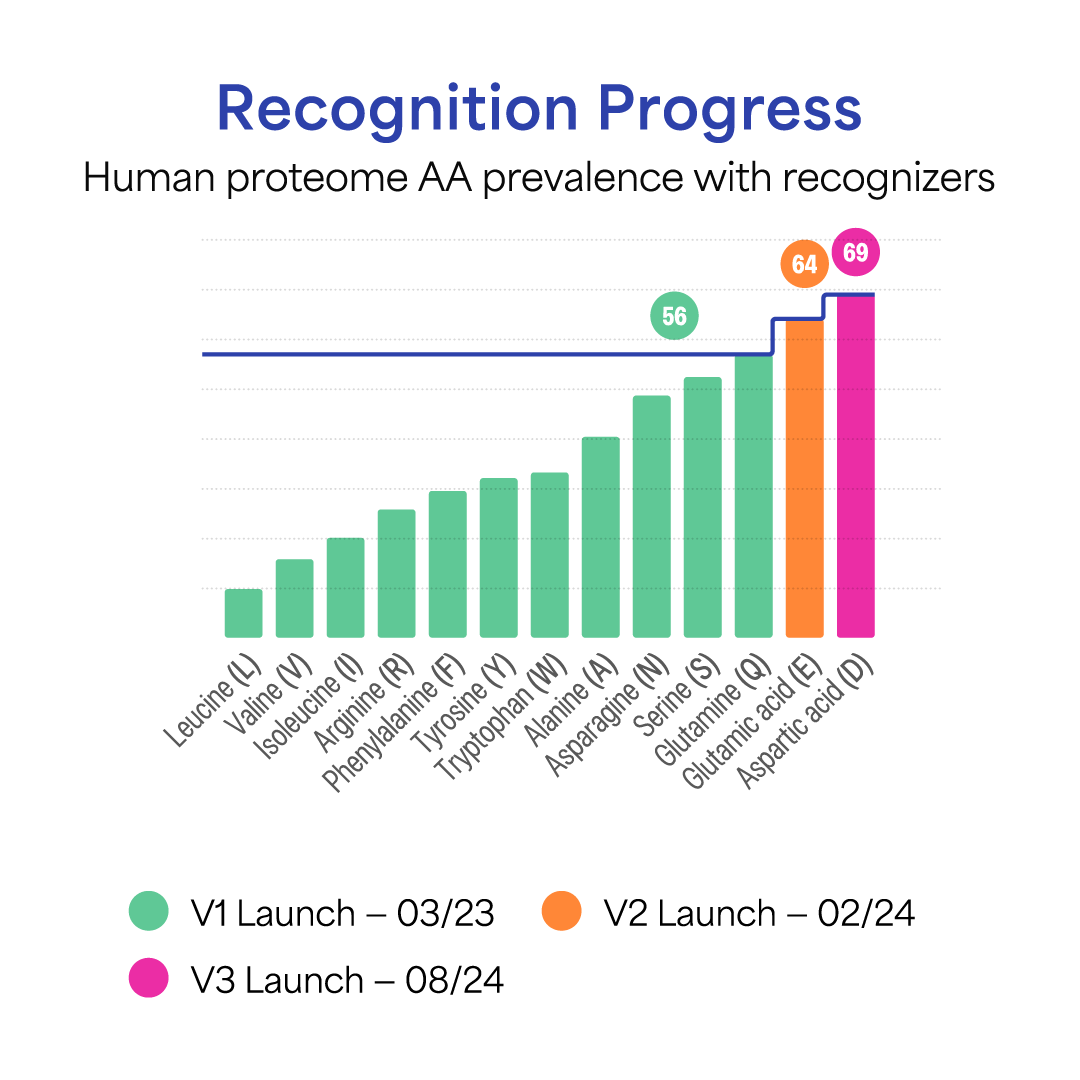
Our V3 recognizer set expands access to the amino acid diversity in the human proteome by more than two-fold since published in Science, 2022.
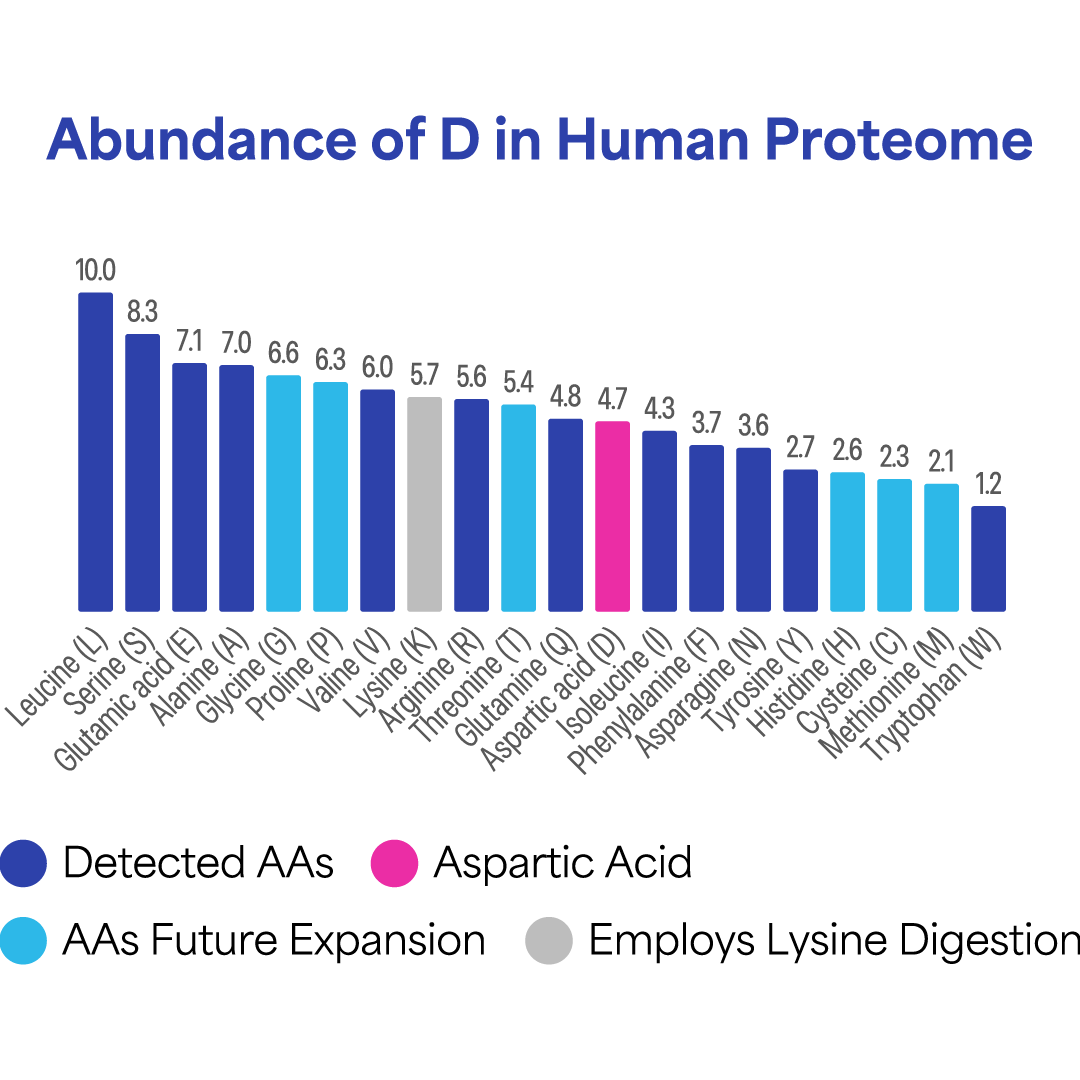
Aspartic acid (D) accounts for nearly 5% of amino acids where the D recognizer — together with improved performance of LIV, NQ, and R recognizers — elevates the ability to explore the human proteome with increased coverage and value to maximize your research.