
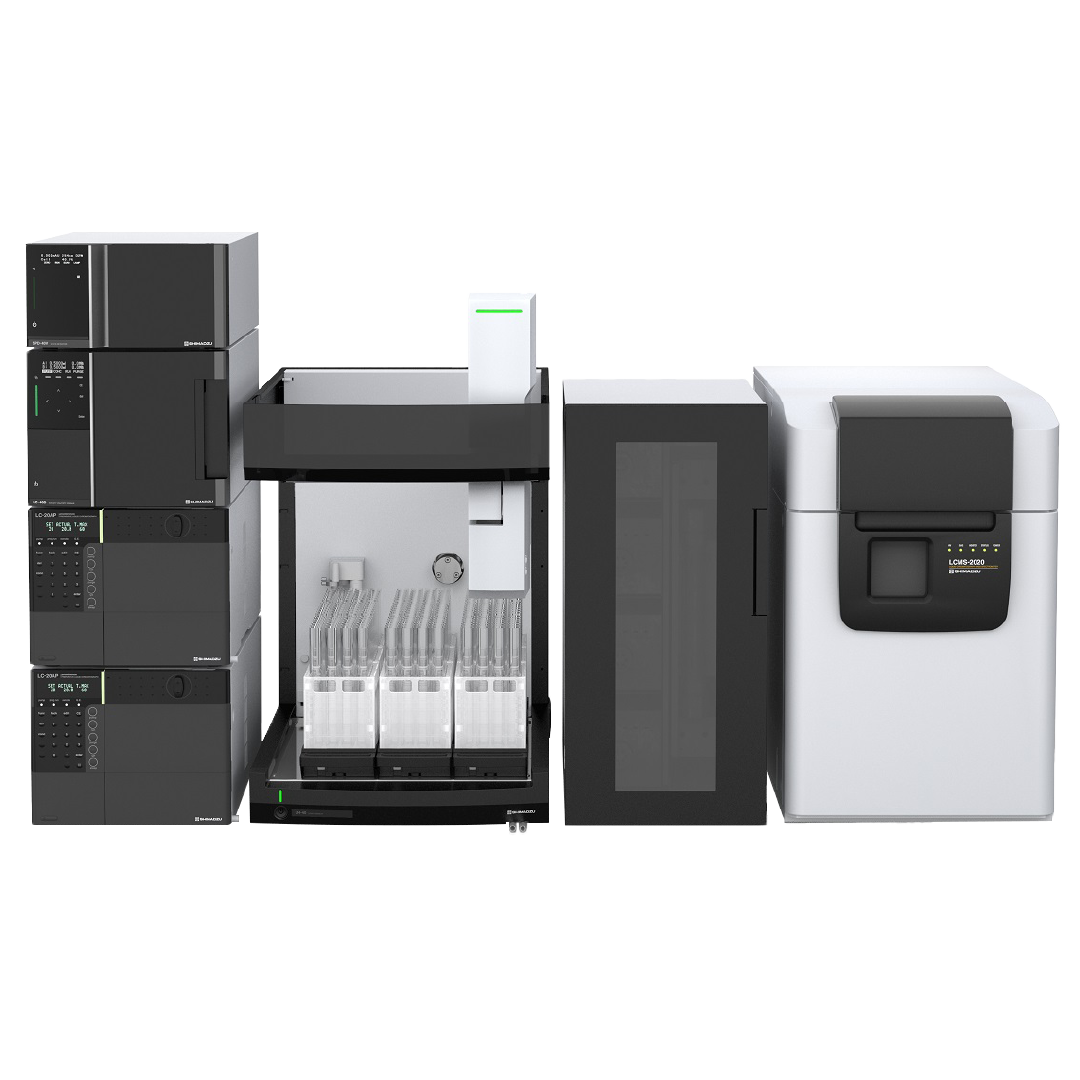
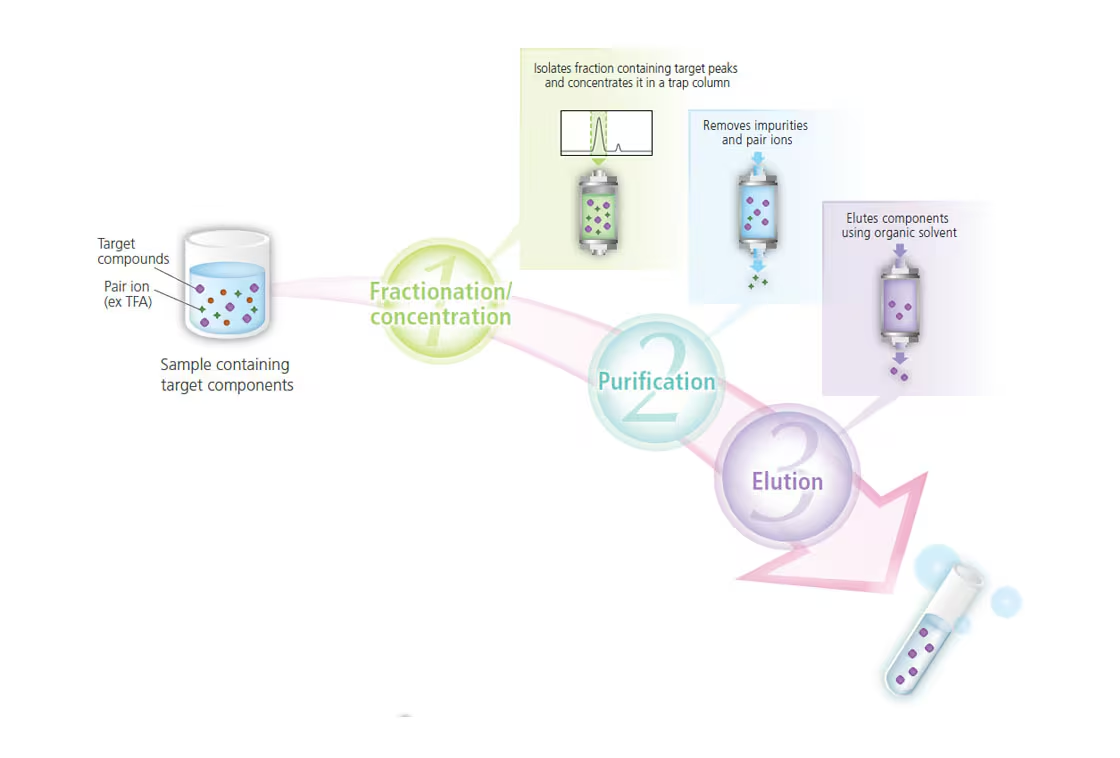
The ultra fast preparative and purification liquid chromatograph system, Nexera UFPLC, streamlines purification operations by automating the preparative process from separation to concentration, purification, and collection. In conventional preparative LC, the amount of fraction is diluted with the mobile phase, resulting in a huge volume, which takes time to evaporate, and post-treatment work, such as removal of salts derived from the mobile phase, is required. Nexera UFPLC concentrates target components by using a trap column. In addition, salts derived from the mobile phase and counter ions of the target compound are removed. Furthermore, because organic solvents are used to elute the target components,the time for evaporation can be significantly reduced. Nexera UFPLC can also be used for standard preparative chromatography by collecting the fractions directly without any concentration steps.
| Solvent Delivery | LC-20AP, up to 150 mL/min, 42 MPa maximum pressure |
|---|---|
| Injection | LH-40, inject from 2 mL to 20 mL of sample |
| Fraction Collection | LH-40, collect in a range of vessels from MTP to 1 L bottles |
| Detector | UV, PDA, ELSD, LCMS-2050, or any A/D compatible detector |
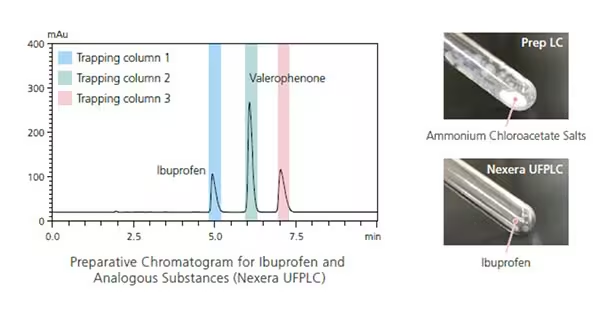
In the conventional preparative LC, salts derived from the mobile phase are included in the recovered product. With Nexera UFPLC, salts derived from the mobile phase can be removed on the trap column. In the picture below, Ibuprofen was prepared using a solvent containing ammonium chloroacetate, a non-volatile salt. With conventional preparative LC, ammonium chloroacetate precipitated at the same time during evaporation. However, ibuprofen was recovered as a single component with Nexera UFPLC due to the use of a trap column.
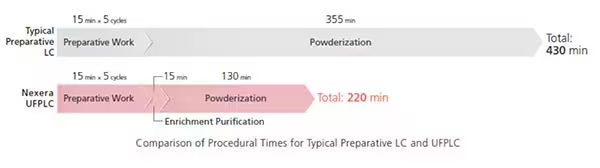
Using Nexera UFPLC, samples are repeatedly injected and the target components are introduced into the same trap column, allowing concentration on the trap column (up to 100 mg capacity). After concentration, the target component is eluted with an organic solvent, allowing recovery of the target component at a high concentration and shortening the time for evaporation. The volume of recovered liquid and the time required for evaporation were measured when 100 mg of the target component, ibuprofen, was purified by trap purification. Compared to the conventional preparative LC process, the overall time was reduced by 50%.
The special Purification Solution software is equipped with peak tracking functions that allows to confirm the analysis status at a glance. To ensure that valuable samples are fractionated, Purification Solution offers three fractionation modes: automated, manual, and time-specified fractionation mode.
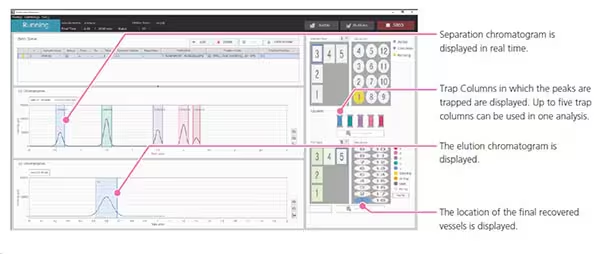
In this mode, the software automatically identifies peaks and collects fractions based on parameter settings. Fractions can also be simulated in advance by opening acquired data using the simulation function, which is specialised for optimising parameter settings. It also supports calculating multiple theoretical detector signals.
In this mode, the mouse pointer is used to select peaks for fractionation while viewing the window. If concentrating a sample by reinjecting it multiple times, the function remembers the timing of the first fraction, so that the fraction is automatically performed at the specified time for each injection thereafter.
This mode collects fractions based on the retention times in previously acquired data. It is ideal for routinely performed preparative purification processes.