

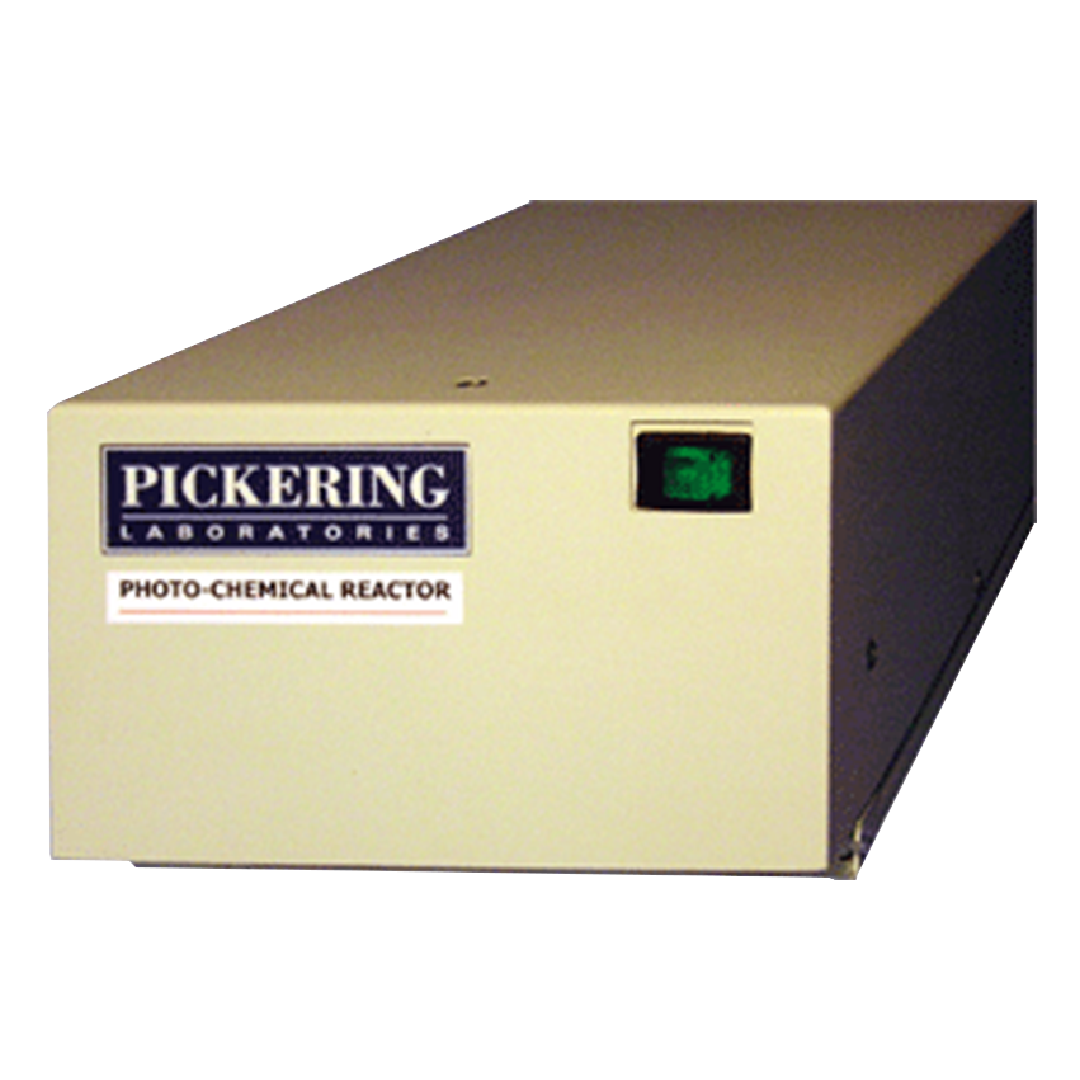
UVE™ Photochemical Reactor provides enhanced detection in trace HPLC analysis of aflatoxins in foods, phenyl urea herbicides in water, barbiturates in blood samples and other compounds. The technique is user-friendly and yields comparable results to electrochemical detection with Kobra cell for aflatoxin analysis. The low inherent fluorescence of aflatoxins B1 and G1 makes derivatization necessary for fluorescence analysis to comply with analytical limit values. This can be carried out easily, conveniently and inexpensively with the UVE using photochemical radiation with UV light at 254 nm, which leads to stable, measurable fluorescence. No additional reagents need to be added. The UVE is simply placed between the HPLC and detector. Aflatoxins B1 and G1 are transformed into stable fluorescent derivatives resulting in clear peaks with enhanced sensitivities when they pass through a special knitted reactor coil with a standard volume of 1.0 mL that is exposed to UV light from a 254-nm low pressure lamp with cooled reflector tube.
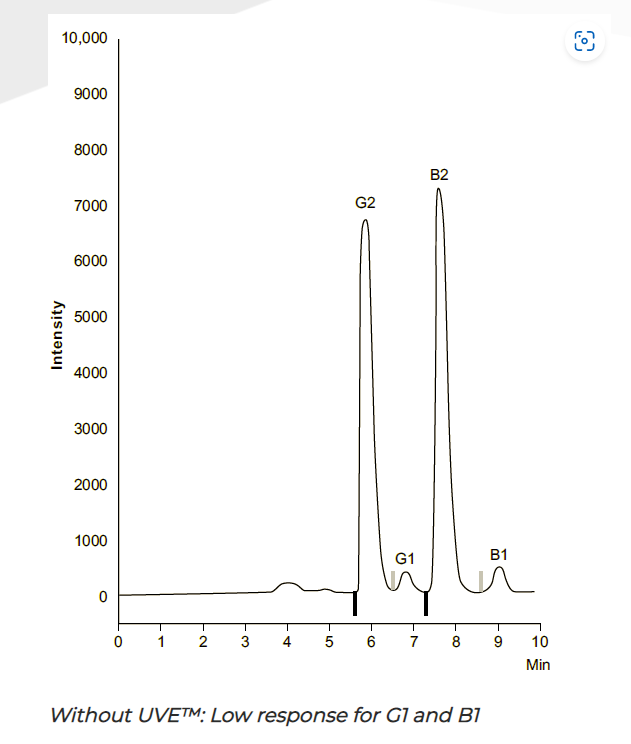
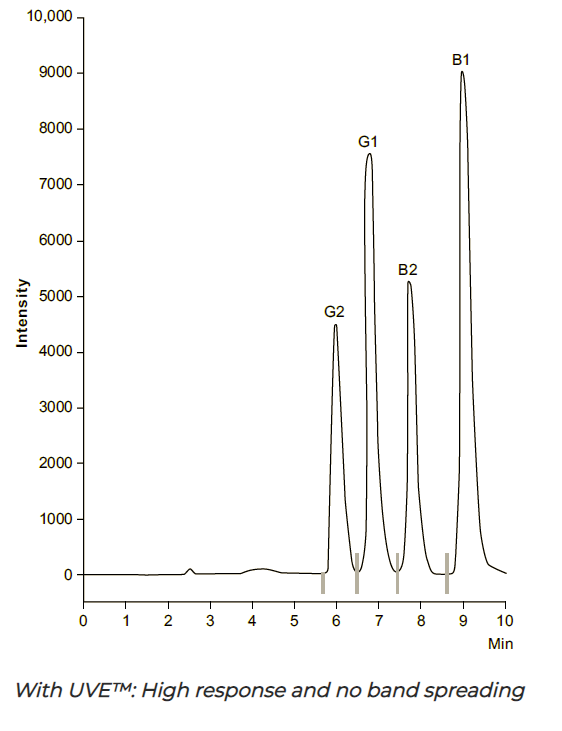
Long term stability of lamp and coil coupled with high light transmission guarantee high sensitivity performance over a long period. The method for aflatoxin using UVE Photochemical reactor has shown excellent performance in proficiency tests on various food matrices. Pickering Laboratories Multi-Residue Mycotoxins method for DON, aflatoxins, fumonisins, ochratoxin A and zearalenone employs photochemical derivatization allowing detection at sub-ppb levels. The UVE can also be used in the analysis of niacin (vitamin B3) and for cosmetic products for the detection of the carcinogenic compound N-nitrosodiethanolamine (NDELA) according to ISO/DIS 10130 (method K84.00-7(EC)).