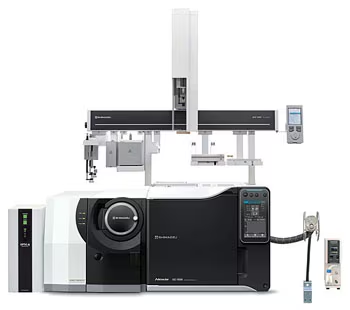

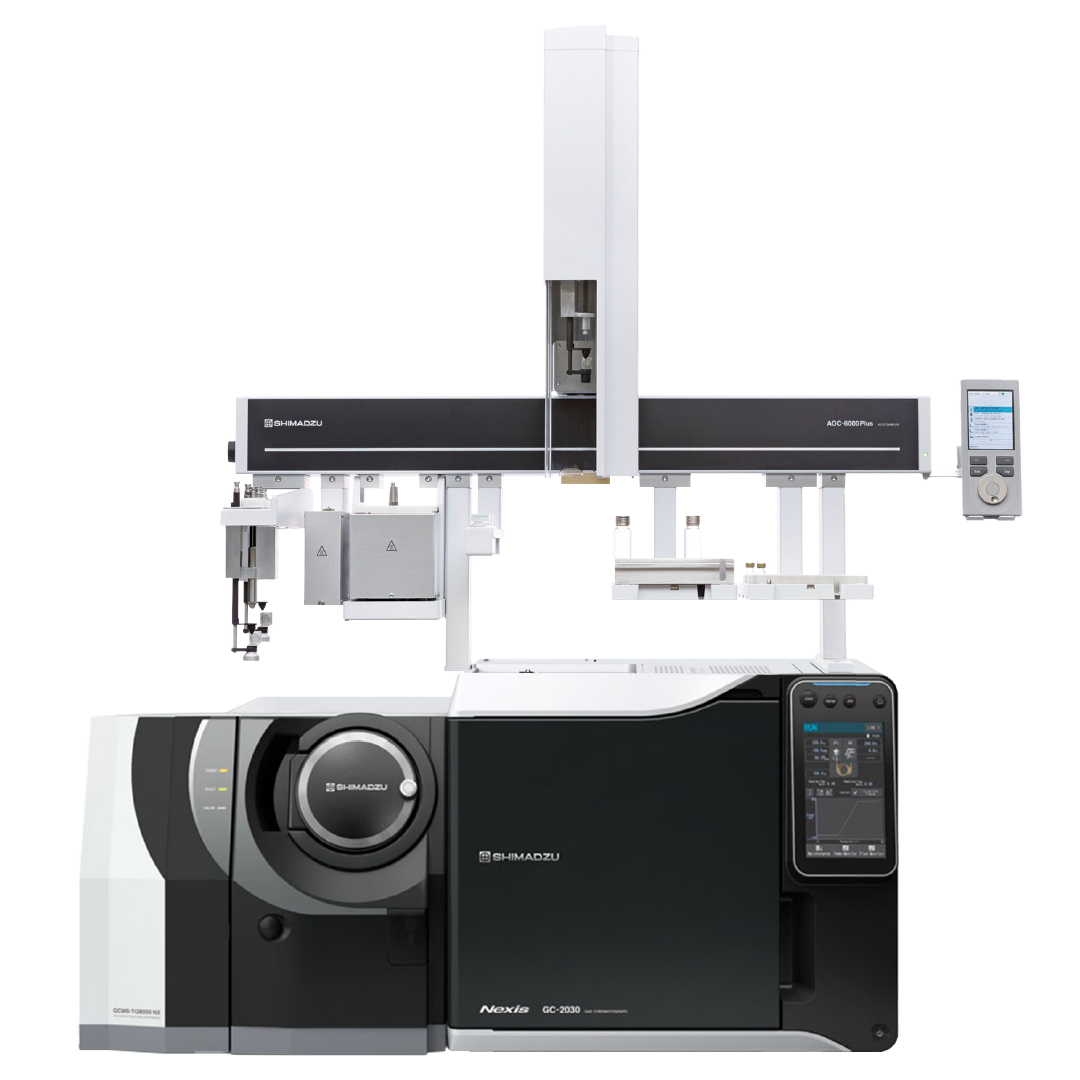
Solving odor problems requires identifying the substances causing the odor. However, accurate identification requires relevant knowledge, such as knowing which types of compounds can cause odors, the odor quality, and threshold levels for sensing odors. This system combines a database of the major odor-causing substances and associated sensory information with a GC-MS. It provides a total solution necessary for analyzing odors.
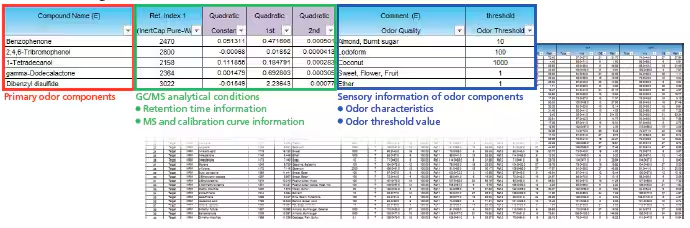
The database includes information registered about all odor-causing substances identified from previous problems. Therefore, even if you don’t know what types of compounds can cause odors, this database allows you to start analyzing them immediately.

Retention indices for each odor component are registered in the database. The AART function can be used to accurately identify components registered in the database by calculating their retention time using retention indices for substances with a wide range of boiling points. In addition, concentrations can be quantified easily based on the calibration curve information registered in the database.
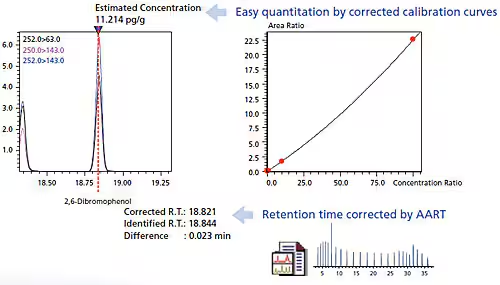
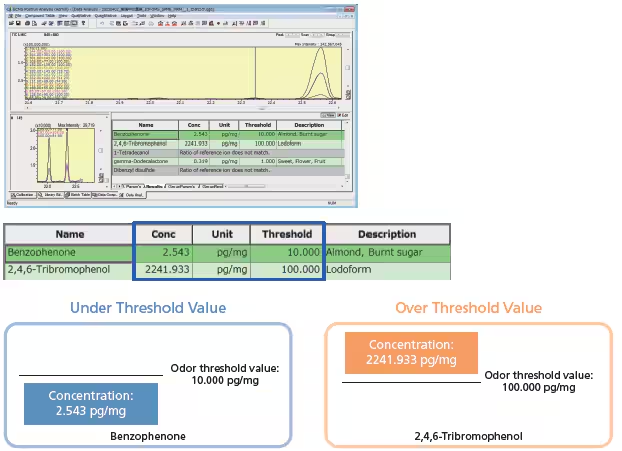
Sensory information about odor components (characteristics and threshold values) is registered in the database. Therefore, by comparing the concentration of components identified in chromatograms with the threshold values, the substances causing odors can be identified. Furthermore, odor components can also be identified by actually smelling them using a sniffer unit.

Three types of stationary liquid-phase columns are included, so that the optimum column can be selected based on the physical properties of the target components. A handbook provided with the system lists the detection limit for each registered component using the respective columns, which makes it easy to determine which column should be selected.
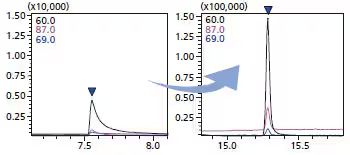
Mass Chromatograms of Isovaleric Acid
(Left: Inert Cap 5Sil/MS, Right: Inert Cap Pure-WAX)
Using the slightly polar column to analyze highly acidic components, such as isovaleric acid, causes peak tailing, whereas using the highly polar column improves the peak shape, which enables measuring the component with high sensitivity.
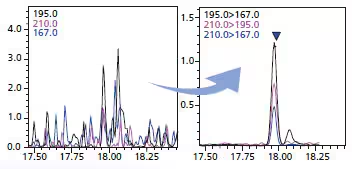
Since some odor components have a low odor threshold, low concentration levels need to be detected to identify the causative substances. High-sensitivity MRM/SIM analysis by GC-MS(/MS) can reliably detect even trace components near the odor threshold (a few pg/g).
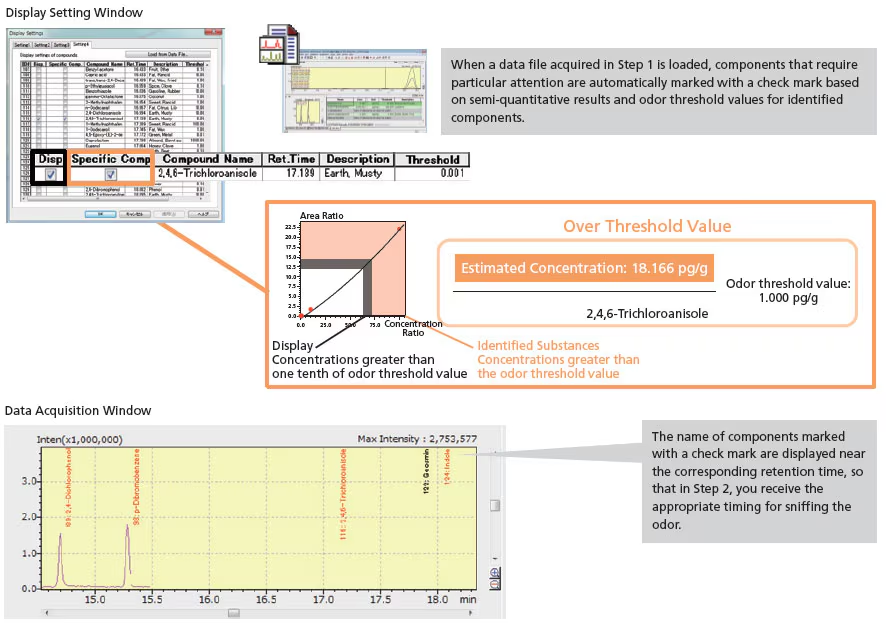
On systems with a sniffer unit, odor components identified from the database can be confirmed. The system includes a function that displays estimated retention times for detected components, so that they can be confirmed based on time.
| AOC-6000 Plus multifunctional autosampler | Supports injecting samples concentrated by SPME, injecting HS samples, or injecting liquid samples. |
| GCMS-TQ8040 NX, GCMS-TQ8040 | Enables detection of trace components by MRM analysis. |
| PHASER (GL Sciences B.V.) |
If a candidate odor component is identified in a chromatogram, this unit can be used to confirm the odor.
|
| OPTIC-4 (GL Sciences B.V.) | Supports injecting samples using a MonoTrapTM. |
GC/MS : GCMS-QP2020 NX, GCMS-QP2020, GCMS-QP2010 Ultra, GCMS-TQ8050 NX, GCMS-TQ8050
Autosampler : AOC-5000 Plus, AOC-20i/s