Phenethylamines, such as methamphetamine and MDMA, are illegal drugs that are abused worldwide. Phenethylamines are prone to adsorption due to their amine backbone, and analysis of the unchanged phenethylamines provides poor mass spectral information. Therefore, they are commonly derivatized to make them more easily differentiated.
Trifluoroacetic (TFA) anhydride is typically used for the analysis of phenethylamines. However, conventional derivatization by anhydrous TFA is time-consuming as it requires drying of the derivatization reagent after derivatization.
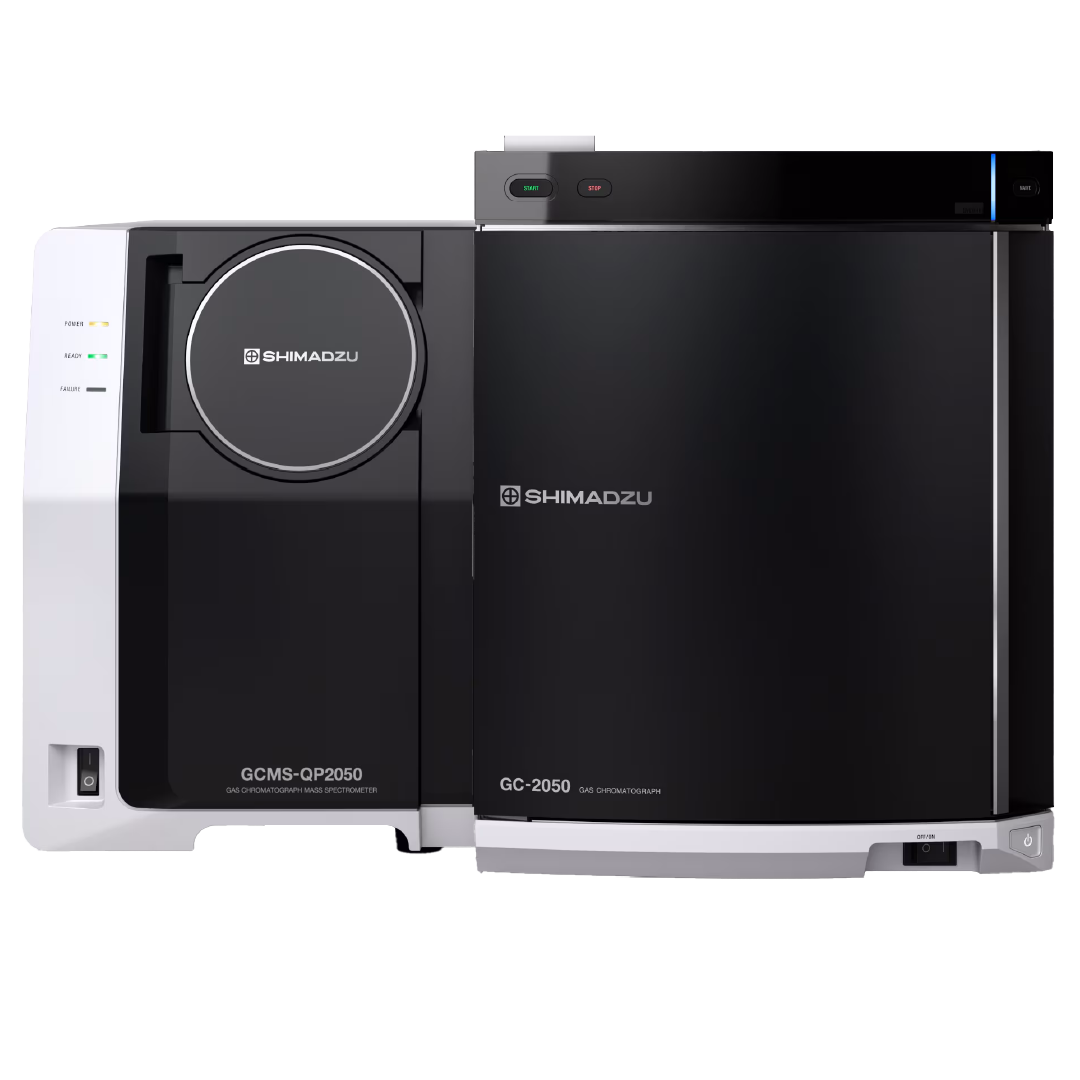
This system allows the on-column derivatization using auto-injector AOC-30i and a LabSolutions GCMS system that is now equipped with 2-step injection. On-column derivatization allows for the direct analysis of extracted urine samples without additional sample pretreatment, which can significantly shorten the time required for derivatization.
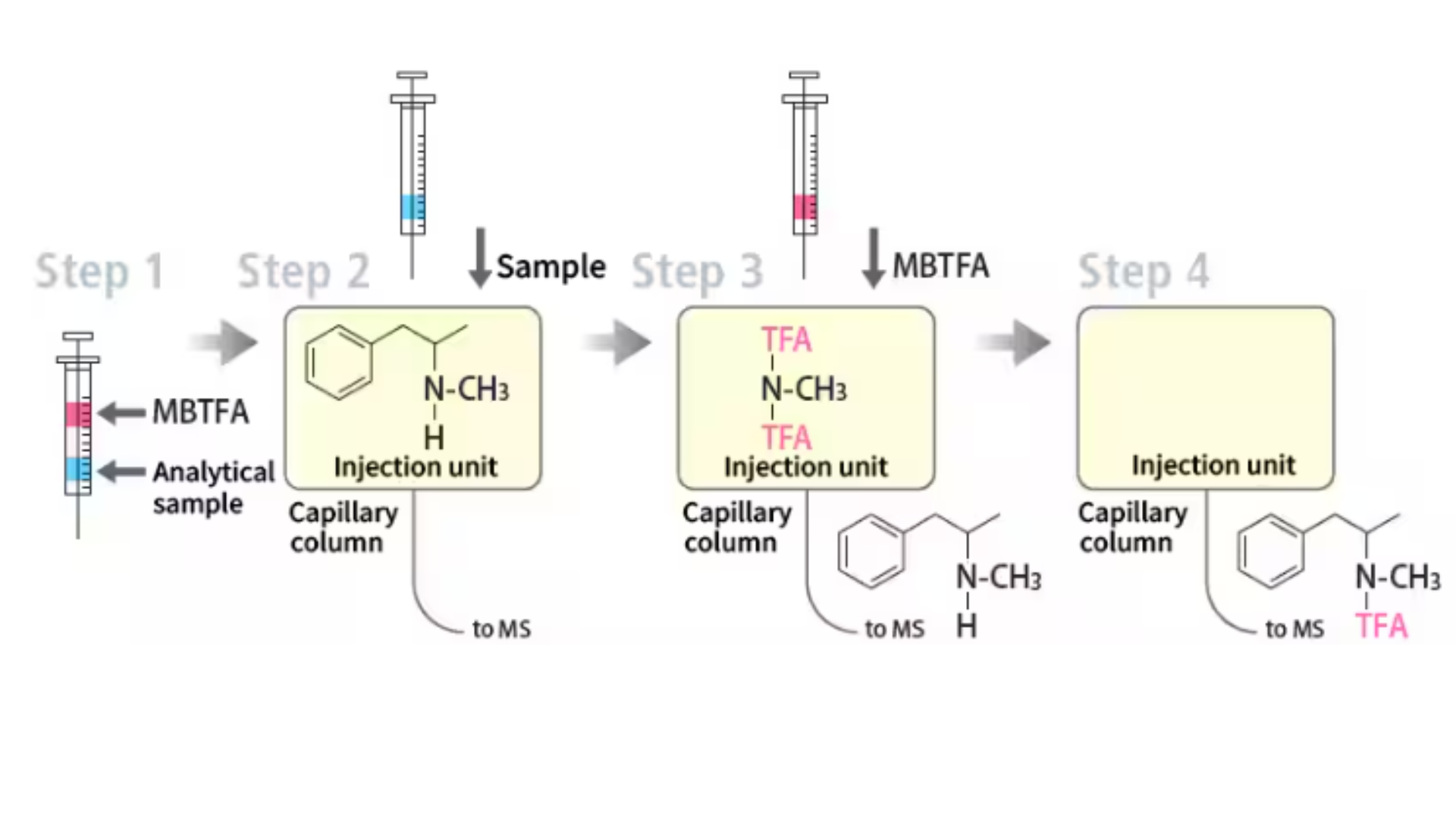
On-column derivatization using 2-step injection is performed by injecting samples into the GC-MS system according to the following steps.
MBTFA (N-methyl-bis-trifluoroacetamide), which was developed specifically for on-column derivatization, was used as the derivatizing agent.
MBTFA derivatizing agent => Air => Analytical sample, are successively drawn into the syringe.
The sample and some of the air are injected into the injection port. The sample is vaporized in the injection port and introduced into the capillary column.
The system waits a few seconds while the target analytes enter the capillary column. Then the MBTFA derivatizing reagent is injected.
When the derivatizing agent passes over target analytes in the capillary column, phenethylamines are derivatized and then analyzed by GC-MS system.