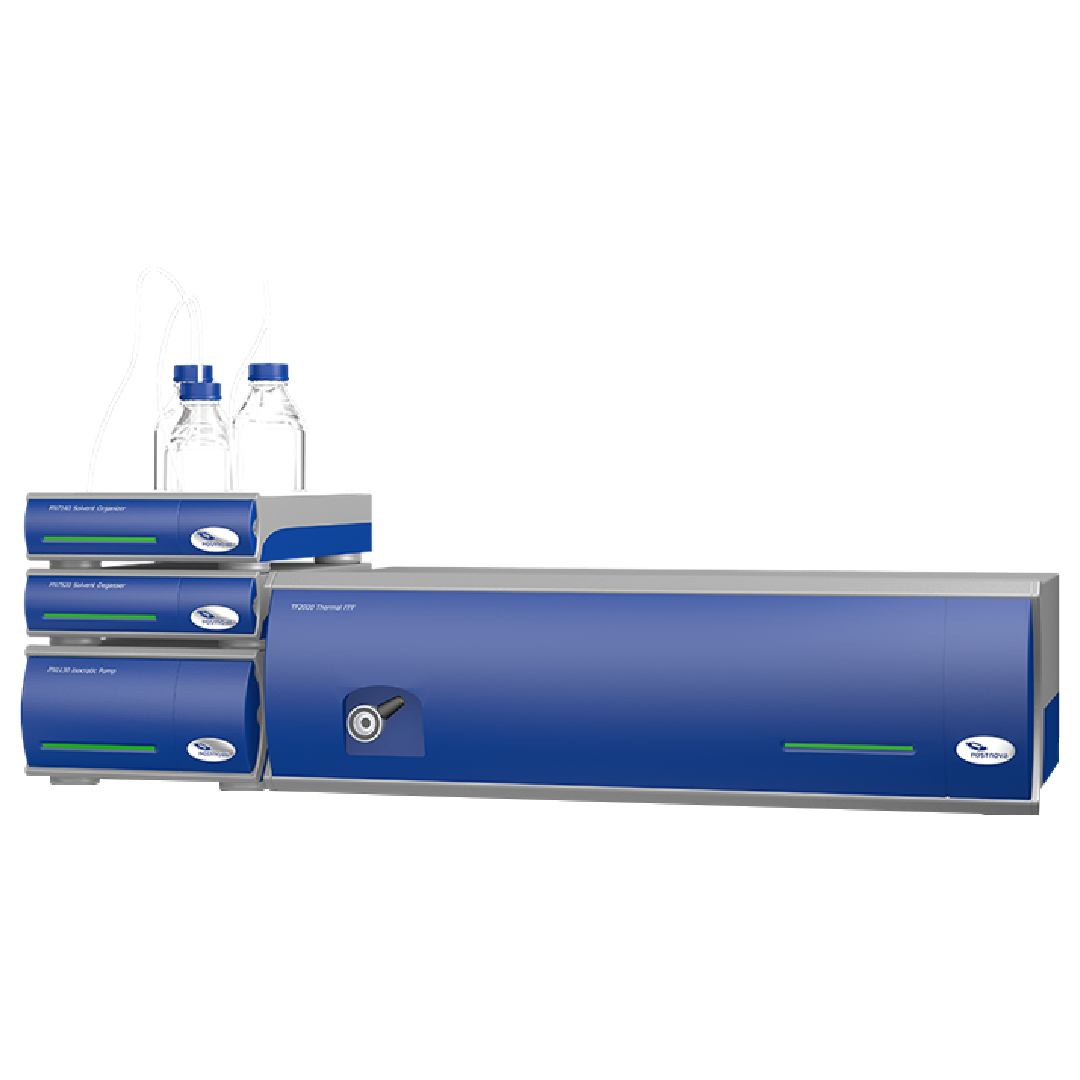
The new award winning Postnova TF2000 Thermal FFF Series was invented to become the first professional modular Thermal FFF system available. It is completely integrated by the NovaFFF single software platform which runs the entire system from autosampler to detectors. The TF2000 Series incorporates the combined solid know-how and the proven technologies from three decades of leadership in FFF. Due to its unique design the TF2000 Thermal FFF system offers more flexibility, higher robustness and better performance than traditional chromatographic systems. A separation column with stationary phase is not required anymore and consequently the TF2000 technology sets a complete new standard and offers a real alternative to column-based polymer characterization techniques.
The TF2000 system has a wide separation range and is able to separate small and large molar masses with high resolution. This allows the separation of various polymers, such as starches, polystyrenes, polymethylmetacrylates, synthetic and natural rubbers as well as other elastomers. In contrast to traditional chromatographic separation techniques, such as GPC/SEC, no sample treatment is necessary as the samples can be injected without filtration. This allows the characterization of quite complex polymer samples without any potential alteration and damage. Also, Thermal FFF has no Size Exclusion limit and because of this fact even ultra-high molar mass, branched and cross-linked polymers as well as gels, aggregates and particles can be separated.
The TF2000 Series system is based on the Thermal FFF principle, using a temperature gradient as driving force for the separation. Polymers affected by this field show Thermal Diffusion which allows the separation by both the Molar Mass and Chemical Composition. This unique feature allows the separation of different polymer material having the same molar mass. The separation can be further optimized by the use of different eluents and various temperature programs. Therefore, the TF2000 can be ideally used for separation of complex polymer samples in the area of Petrochemical, Adhesives, Rubbers, Polymers and Nanomaterials.
In order to enable the user to fully access this wide application range, the TF2000 Thermal FFF is available with various add-on modules and special FFF detectors, such as Refractive Index (RI), Multi-Angle Light Scattering (MALS) and Dynamic Light Scattering (DLS). All Postnova FFF modules and FFF detectors have been especially designed for FFF and optimized not only for the use with the TF2000 Thermal FFF but also for the other Postnova FFF versions. Additionally, the TF2000 Series has been designed for easy interfacing with existing high-end detection technologies from leading instrument suppliers, so that the user can ideally integrate the Postnova FFF technology into the existing laboratory infrastructure in order to maximize efficiency and investment.
The TF2000 allows the simultaneous separation, characterization and fractionation of polymers, gels and particles within one measurement. The channel is reusable and only needs to be cleaned from time to time. There is no consumable which needs to be replaced frequently.
Other than in chromatography, the separation in Thermal FFF can also be performed for polymers from approx. 10 kDa up to molar masses of 10 GDa. No size exclusion effect is observed, making the TF2000 the ideal tool for the separation of large and ultra-large cross-linked polymers.
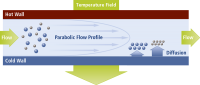
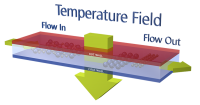
Because of the open channel and the absence of any stationary phase the separation can be performed under the absence of shear forces and stress to the macromolecule. Typical chromatography problems, such as filtering/adsorption effects, shear induced chain degradation and late elution effects can be avoided.
Because of the absence of the stationary phase, nearly any kind of organic and even some aqueous liquids can be used in Thermal FFF. Only the thermal diffusion properties of the polymers under investigation need to be sufficiently strong in the given eluent. This allows to easily use also aggressive and otherwise difficult to use eluents such as DMSO for starch analysis etc. There is no need to add salt such as LiBr which is often essential in chromatography to avoid polymer interacting with stationary phases.
The NovaFFF software is based on a “one Software for all devices” strategy, incorporating system control, data collection and data evaluation as well as reporting.
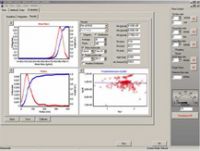
No more start-up of two programs, copy and paste of methods between different programs or problems about the stability of the multitasking capabilities of the PC operating system when using NovaFFF.