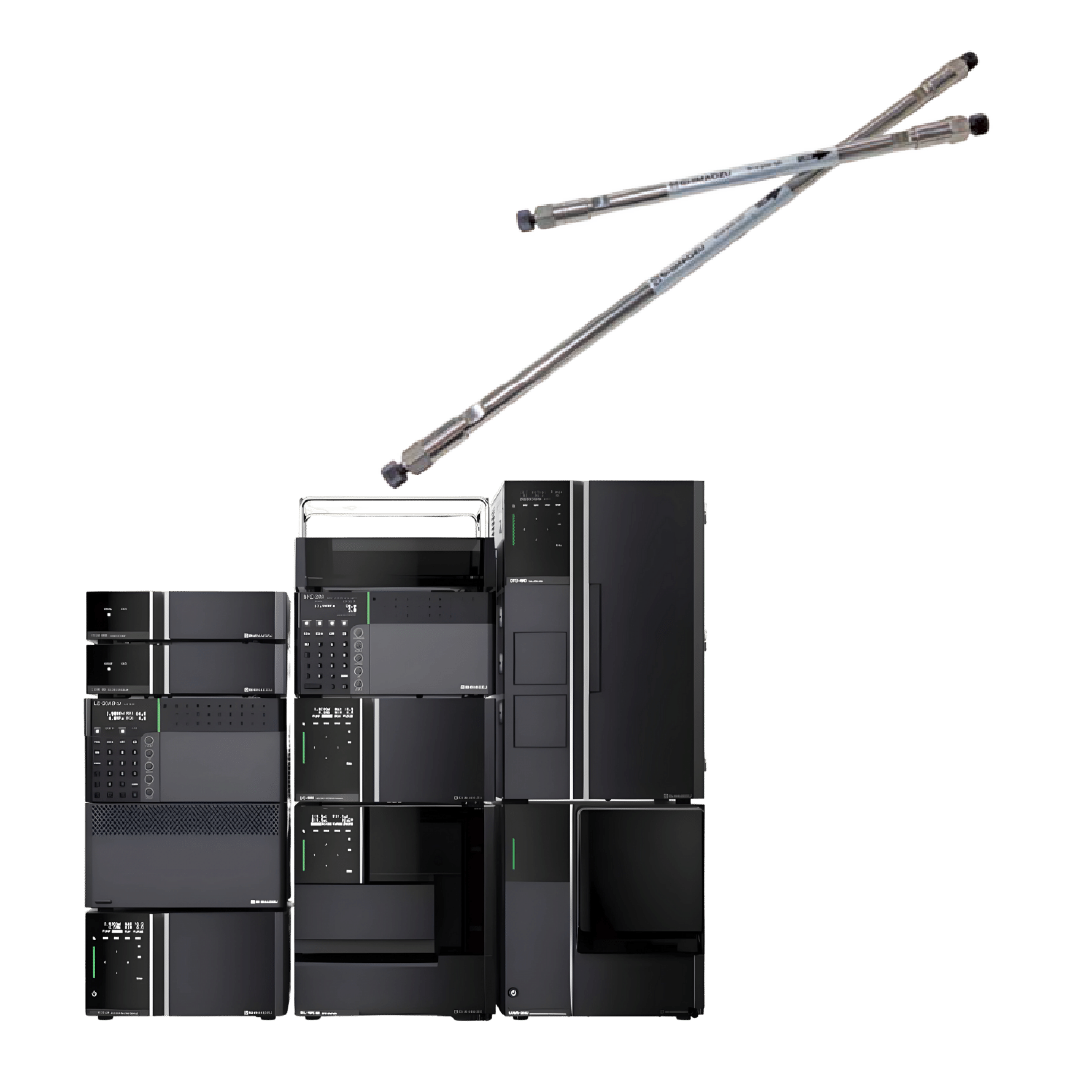
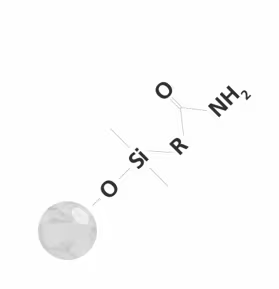
When conducting analysis with the Nexera UC supercritical fluid chromatography system, because diffusion of the sample band in the mobile phase is high compared with liquid chromatography, separation behavior changes significantly depending on the types of columns used. Shim-pack UC series was designed with a variety of stationary phases, making it suitable for analysis of various compounds.
Achieve High Speed And High Performance
Shim-pack UC series offers various stationary phases suitable for the mobile phase of high diffusion and low-viscosity liquid carbon dioxide. Analysis time can be reduced at a high flow rate without impairing the separation performance. In addition, analysis speed, which is limited in HPLC, can be increased.
Wide Range Of Stationary Phases Meets Diverse Needs
Shim-pack UC series was designed with twenty kinds of packing materials and a wide range of particle and column sizes that can be selected based on the analyte.
High Durability And Stable Reproducibility
Shim-pack UC series achieves high inertness for improved analysis precision and increased column durability. Its uniform silica surface and stable chemical modification also ensure high analysis reproducibility.
Features
A Wide Variety Of Stationary Phases For Separating All Sorts Of Compounds
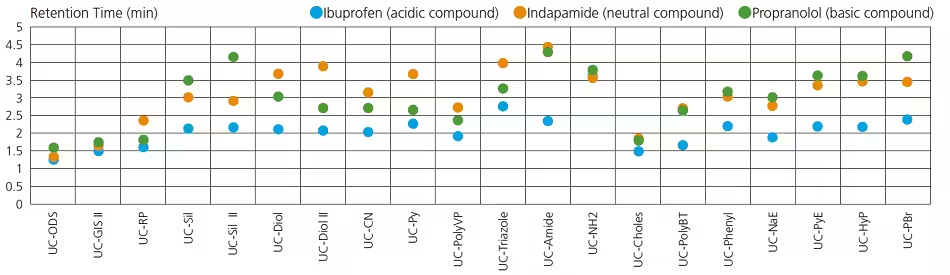
Since the hydrophobicity of supercritical carbon dioxide is similar to hexane, the primary separation behavior of SFC is considered generally similar to the normal phase mode. Depending on the stationary phase selected, other interactions can occur, such as pi-pi interactions or electrostatic reactions similar to HPLC. All 20 column types can be used for compounds with approximately neutral polarity. The figure below shows how retention behavior can vary significantly depending on the type of stationary phase used when analyzing typical acidic, neutral, or basic compounds. Stronger retention can be achieved by selecting a stationary phase expected to interact with the target compound.
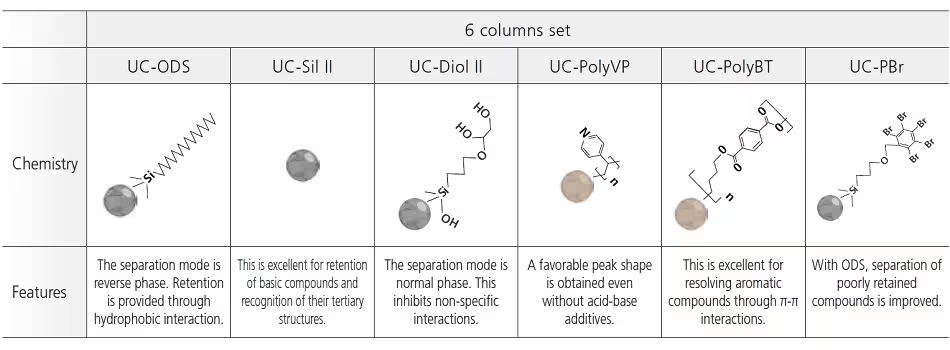
Since normal phase separation is the main separation mode used for SFC, normal phase UC-Diol and UC-Diol II are the most commonly used columns. They are followed by UC-Py columns, which exhibit similar behavior to ethylpyridine-basedcolumns. SFC uses a mixture of supercritical carbon dioxide and a modier (an organic solvent such as methanol) regardless of the stationary phase used. Therefore, the same mobile phase composition can be used for serial analysis through all columns. Column scouting is effective by using the following set of 6 columns, each providing a different separation selectivity.
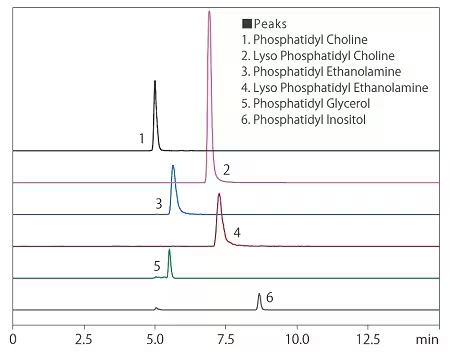
UC-Diol and UC-Diol II columns offer excellent general applicability for analyzing a wide variety of compounds, from phospholipids and other lipids to highly polar peptide compounds. However, a column with an ODS group stationary phase, such as the Shim-pack UC-ODS and Shim-pack UC-GIS II, must be used to separate phospholipids by molecular species with similar modifier parameters.
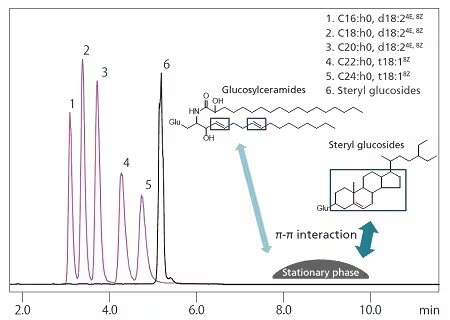
That means it may be possible to separate isomers and other compounds by SFC that are difficult to separate by HPLC. Columns with specific or multiple interaction modes may help improve separation. UC-PolyBT, with its high planar recognition capacity, and UC-PBr, with its dispersion power with Br, are useful.
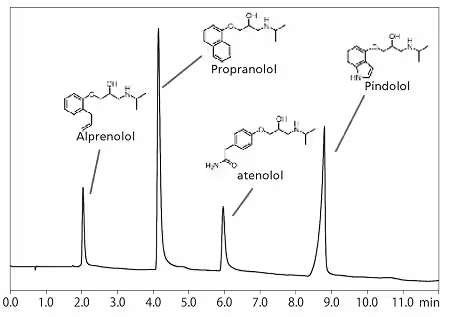
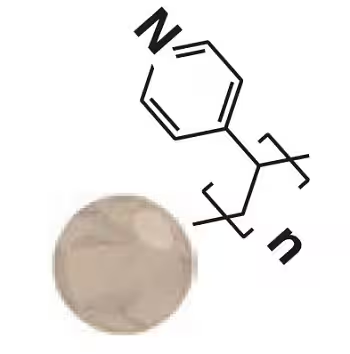
Improved peak shapes result from suppression of the ionization of target compounds and the masking of solid phase secondary functional groups through the addition of acids, such as formic acids, and bases, such as amines. In contrast, during fractionation, it may be preferable not to use additive agents depending on the intended use of the fraction. With UC-PolyVP, in which poly(4-vinylpyridine) is bound to a silica gel carrier, good peak shape can be obtained even without the addition of acids or bases.When analyzing β blockers, which are basic compounds, sharp peaks are obtained even without the addition of salts. It is believed that poly(4-vinylpyridine), which is bonded to the polar silica gel surface, contributes to reducing interactions between the residual silanols and basic compounds.
Analysis of a Wider Range of Low and High-Polarity Compounds
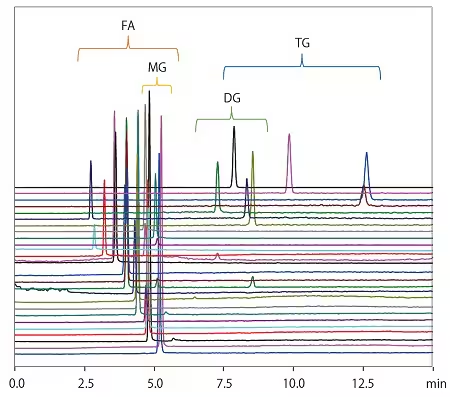
Different separation methods are generally used for fatty acids, which are typically analyzed by GC, and glycerides, which are typically analyzed by HPLC. However, because supercritical carbon dioxide has properties similar to hexane, SFC is well-suited for analyzing compounds with low polarity. UC-HyP columns can be used to simultaneously analyze everything from fatty acids to glycerides.
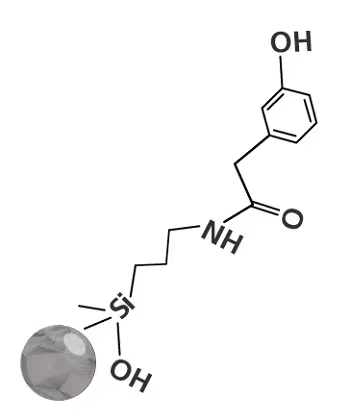
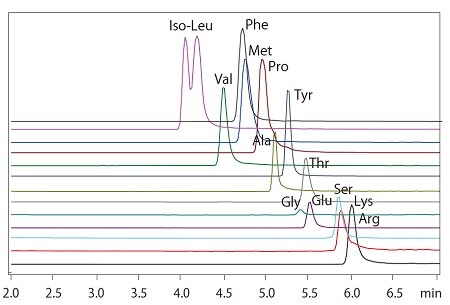
Highly polar compounds, such as amino acids, can be analyzed by selecting an appropriate stationary phase and modier. By using a UC-Amide column, amino acids can be analyzed without the time and trouble of derivatization.
Especially Useful for Separating Isomers and Other Compounds
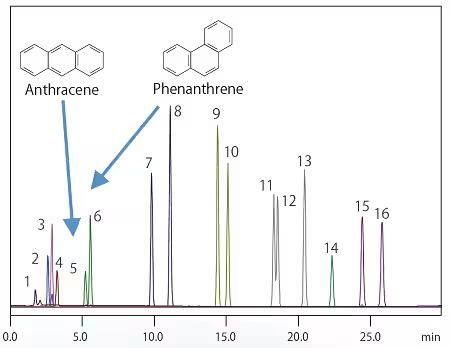
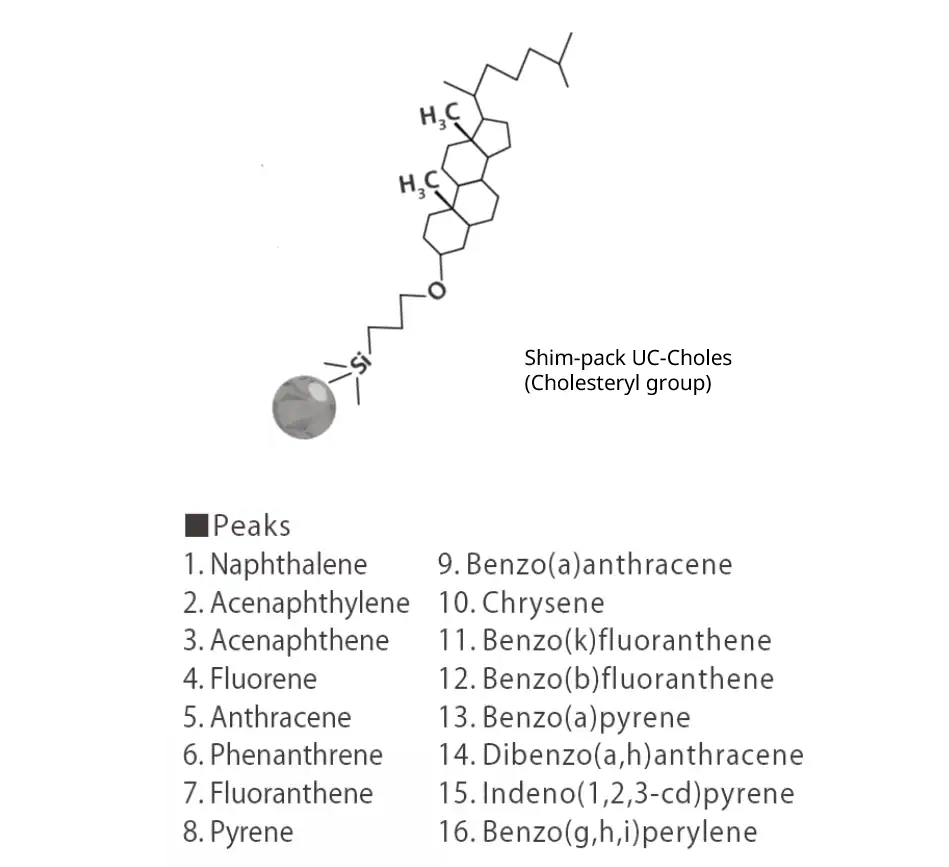
PAHs contain multiple isomers, such as anthracene and phenanthrene, which cannot be separated with a mass spectrometer. Therefore, they must be separated by chromatography. All five isomer combinations can be separated using a UC-Choles column. The rigid stationary phase structure of the cholesteryl group is effective for resolving similar planar compounds.