Read MoreBoost HDR precision with Alt-R™ HDR Enhancer ProteinWebinarLearn how Alt-R™ HDR Enhancer Protein improves CRISPR knock-in efficiency by promoting HDR pathway precision—seamlessly integrated into workflows.Gene EditingIDT CRISPR Workflow delivers end-to-end genome editing solutions from design to analysis, combining precision, flexibility, and expert support to accelerate advanced genomic research.Contact Usarrow_forwardarrow_back
Alt-R CRISPR-Cas9 System
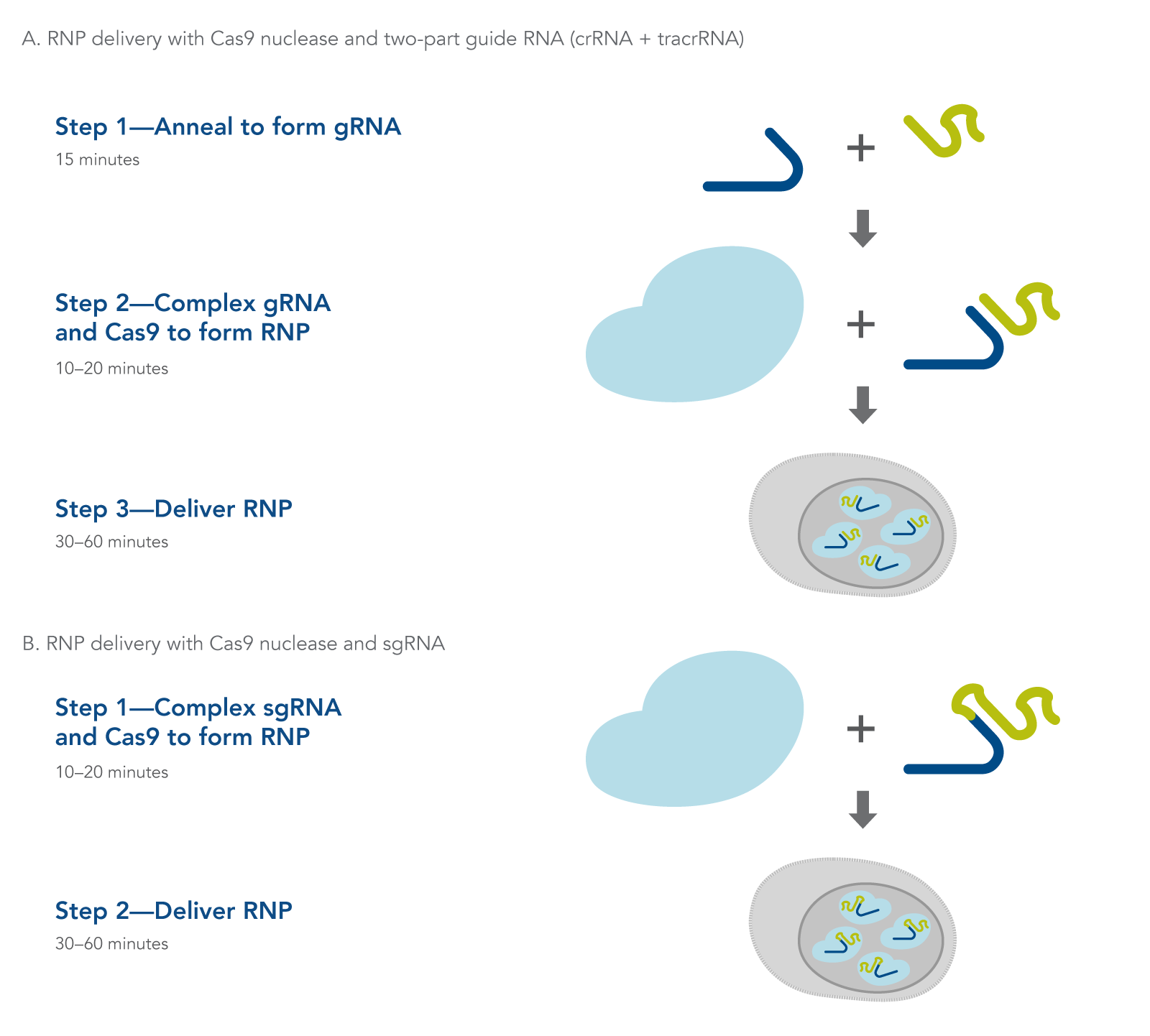
CRISPR-Cas9 genome editing methods use a Cas9 endonuclease to generate double-stranded breaks in DNA. Cas9 endonuclease requires a CRISPR RNA (crRNA) to specify the DNA target sequence, and the crRNA must be combined with the transactivating crRNA (tracrRNA) to activate the endonuclease and create a functional editing ribonucleoprotein complex.
Applications
Cancer Research
Explore IDT’s spectrum of customizable, high-performing solutions with flexible, efficient workflows for your cancer research insights. As your trusted partner, we can work together to drive cancer discoveries.
Infectious Disease
With a legacy of customization, agility and expertise, turn to IDT to ensure your qPCR/NGS workflows are ready-built for current and emerging global health threats.
Genetic Diseases
Genetic diseases are the result of alterations in a genome which manifests as phenotypical or developmental abnormalities, diseases, or predispositions to certain conditions. Studying genetic disease can be challenging in identifying the relevant alterations and their potential causation of a phenotype.
Antibody Discovery
Antibody research is a crucial first step for antibody and immune-oncology drug development. This discovery research process includes steps from target assessment to lead optimization and applies a variety of molecular engineering and synthetic biology methods.
Therapeutic Protein Engineering
Explore the various applications of synthetic biology through protein engineering. Using high-quality, high-fidelity DNA fragments, together with technologies like artificial intelligence and machine learning, discover how protein engineering enables rapid discovery and advancement.
Our Impact
Backed by Danaher, IDT combines innovation, scientific expertise, and advanced DNA synthesis technologies to enable scalable genomics breakthroughs with global research and healthcare partners. From oligo manufacturing to end-to-end genomics solutions, IDT empowers researchers to accelerate discovery and translate science into real-world impact.
0+
Customer Publications
0+
Researchers Served Per Year
Push boundaries with unmatched customization options