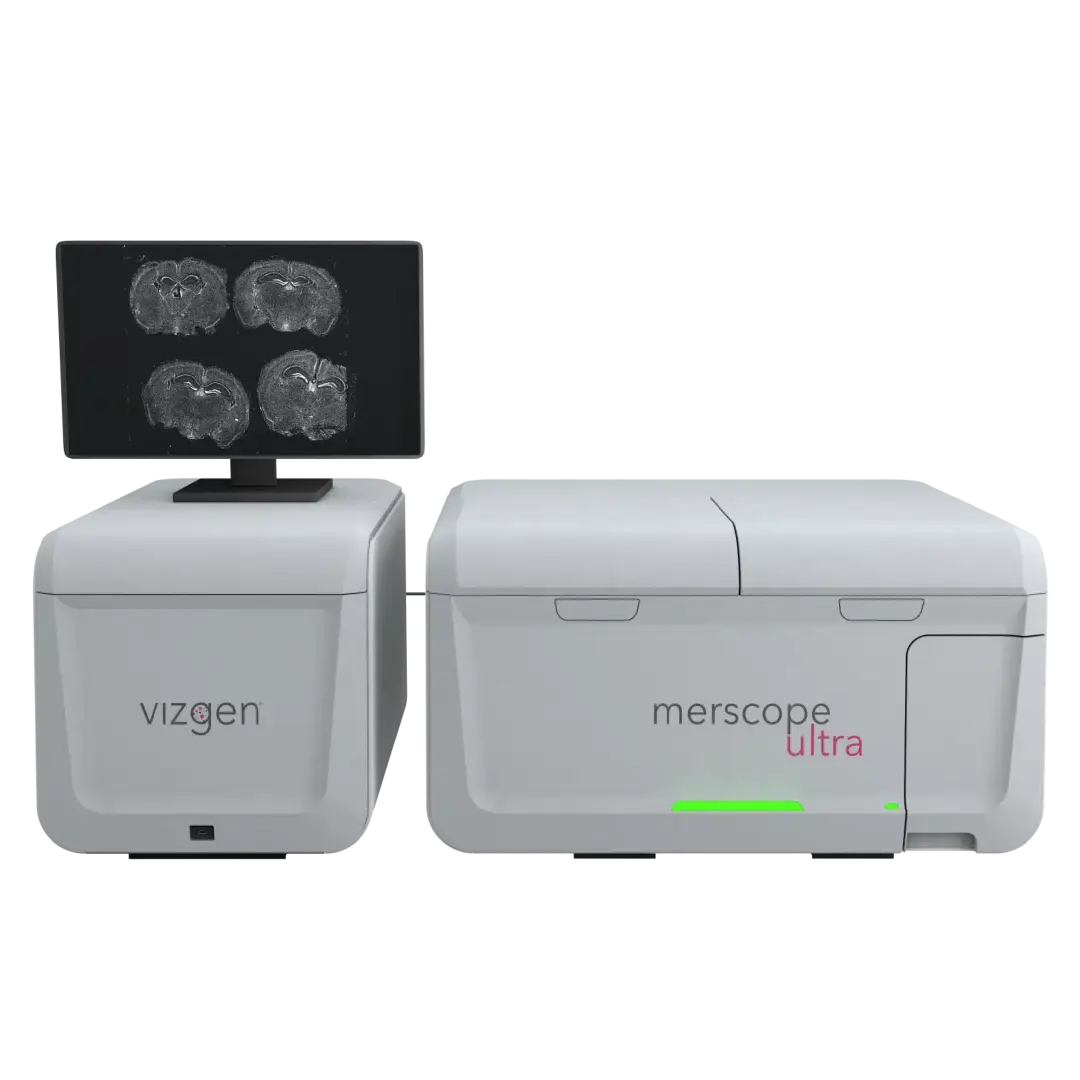


Acquire high-quality, reproducible spatial data from even the most difficult samples, including archival FFPE and fresh-frozen tissues.

Improved sensitivity detects more RNA molecules with uncompromised specificity and subcellular resolution, revealing subtle expression gradients.

Generate richer datasets with more cells passing quality filters, enabling higher transcript detection and deeper biological context per sample.

Distinguish rare and abundant cell populations across complex tissues to illuminate the mechanisms that drive health and disease.

Explore molecular and cellular crosstalk within intact tissue architecture to inform disease models and therapeutic discovery.

Built on decades of MERFISH spatially resolved transcriptomics innovation, MERFISH 2.0 delivers scalable, high-confidence results.
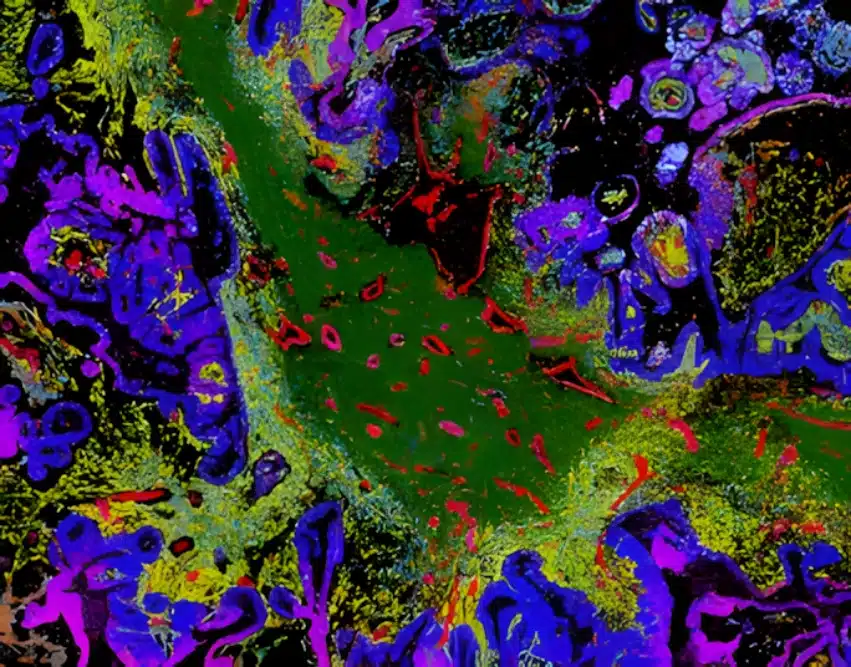

Detect brain cell types and circuits in intact tissue with MERFISH spatial transcriptomics or multiplex proteomics.

Profile the tumor microenvironment: map up to 1,000 genes at single-cell scale and quantify checkpoint proteins with multiplex IF to inform therapy response.

Map immune niches with spatial transcriptomics or multiplex proteomics to profile cell states, interactions, and checkpoint/activation markers in context.