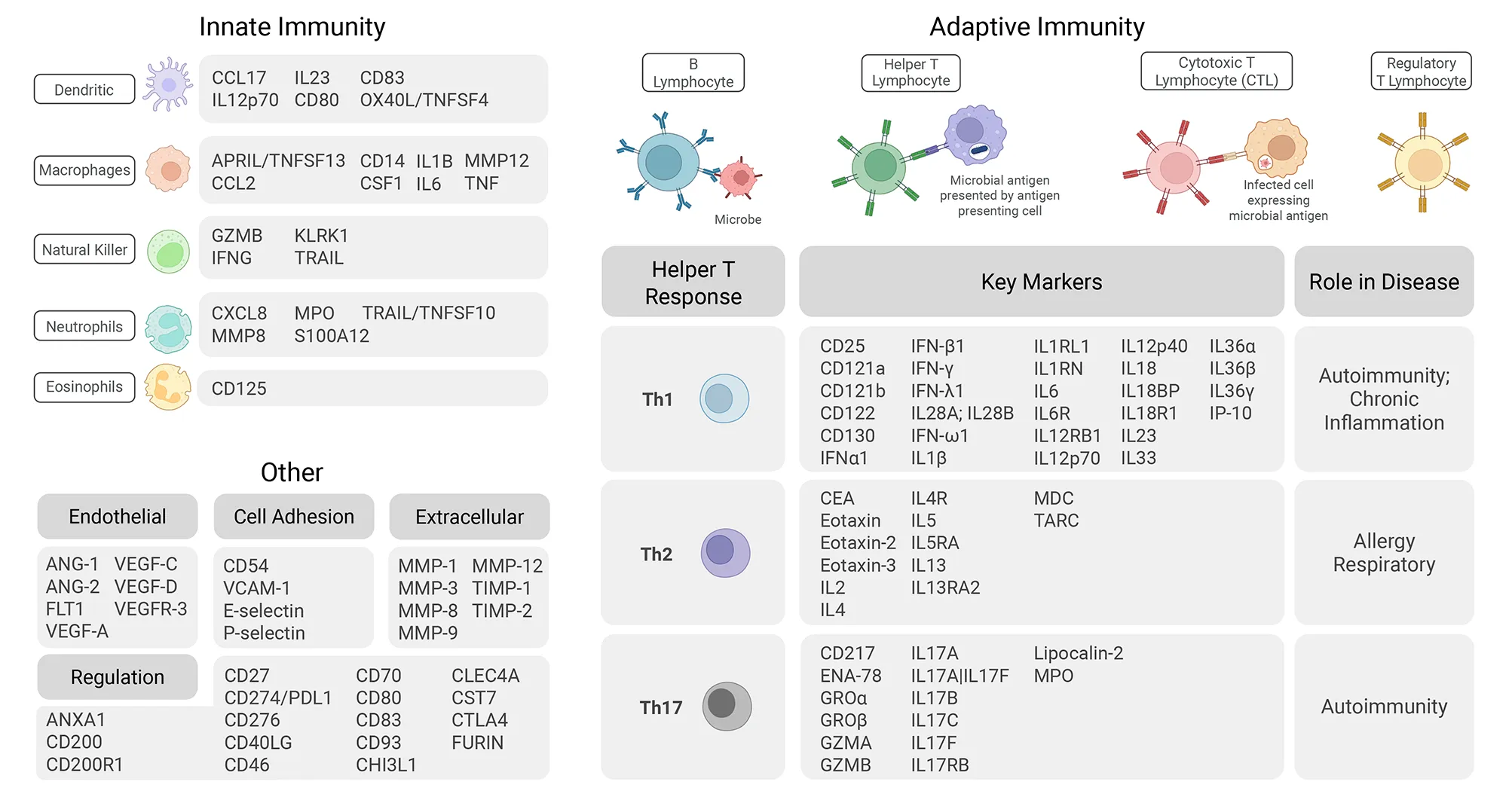



Advances in understanding autoimmune diseases, such as rheumatoid arthritis, lupus, type 1 diabetes, IBD/ Crohn’s disease and psoriasis, have uncovered complex regulatory pathways driving these conditions. Biomarkers that reflect immune dysregulation or inflammation-like cytokines, chemokines, and autoantibodies-are becoming critical for early diagnosis and personalized treatment strategies.

Immunotherapy-harnessing or modulating the immune system to combat disease-is transforming oncology, infectious diseases, and even neurodegenerative conditions. Innovations like checkpoint inhibitors, CAR-T cell therapies, antibody drug conjugates and monoclonal antibodies highlight the need for precise biomarker detection to monitor efficacy and minimize adverse effects.

Measuring inflammation in respiratory diseases is essential for accurate diagnosis, monitoring disease progression, and guiding treatment decisions. Inflammatory biomarkers, such as C-reactive protein (CRP), interleukins, and procalcitonin, can help detect respiratory infections early and assess the severity of conditions like asthma, chronic obstructive pulmonary disease (COPD), and pneumonia. By tracking changes in these biomarkers, clinicians can tailor therapies to individual patients, improve outcomes, and reduce the risk of complications associated with uncontrolled inflammation.

Measuring inflammation biomarkers in infectious diseases is crucial for understanding pathophysiology, guiding treatment, and monitoring outcomes. Inflammatory biomarkers, such as C-reactive protein (CRP), interleukins (e.g., IL-6), and procalcitonin (PCT), allow for early identification of infections before clinical symptoms fully manifest.