

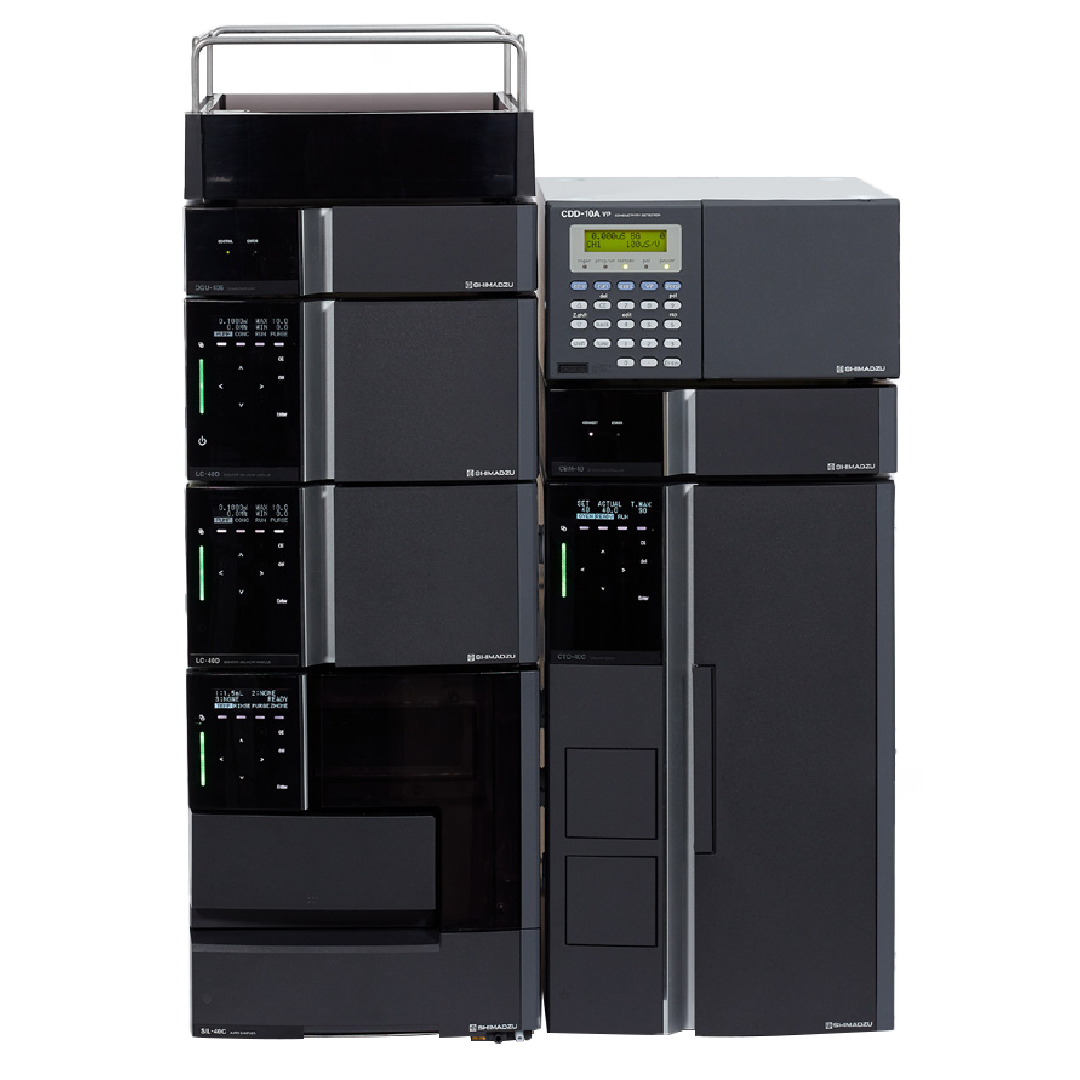
The Nexera Organic Acid Analysis System is highly suited for food and environmental analysis, as a highly selective high-sensitivity LC method. It uses separation by ion exclusion chromatography and Shimadzu’s unique detection technique (pH-buffered electric conductivity detection). The system finds applications in pharmaceuticals as well as bioanalysis.
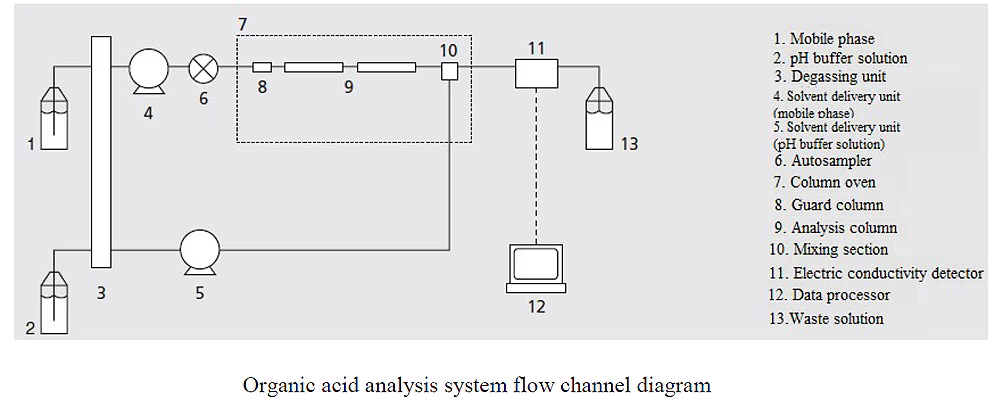
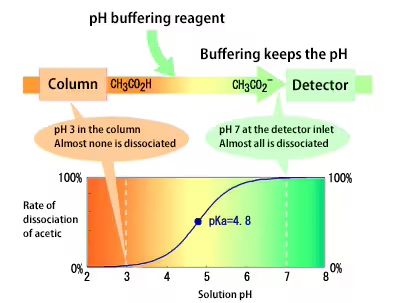
In this system, organic acids are separated using ion exclusion chromatography via Shimadzu’s unique detection technique (pH-buffered electric conductivity detection). Then, a pH-buffering reagent is continuously added to the column eluate in order to keep the pH at around neutral and dissociate organic acids in order to detect electric conductivity.
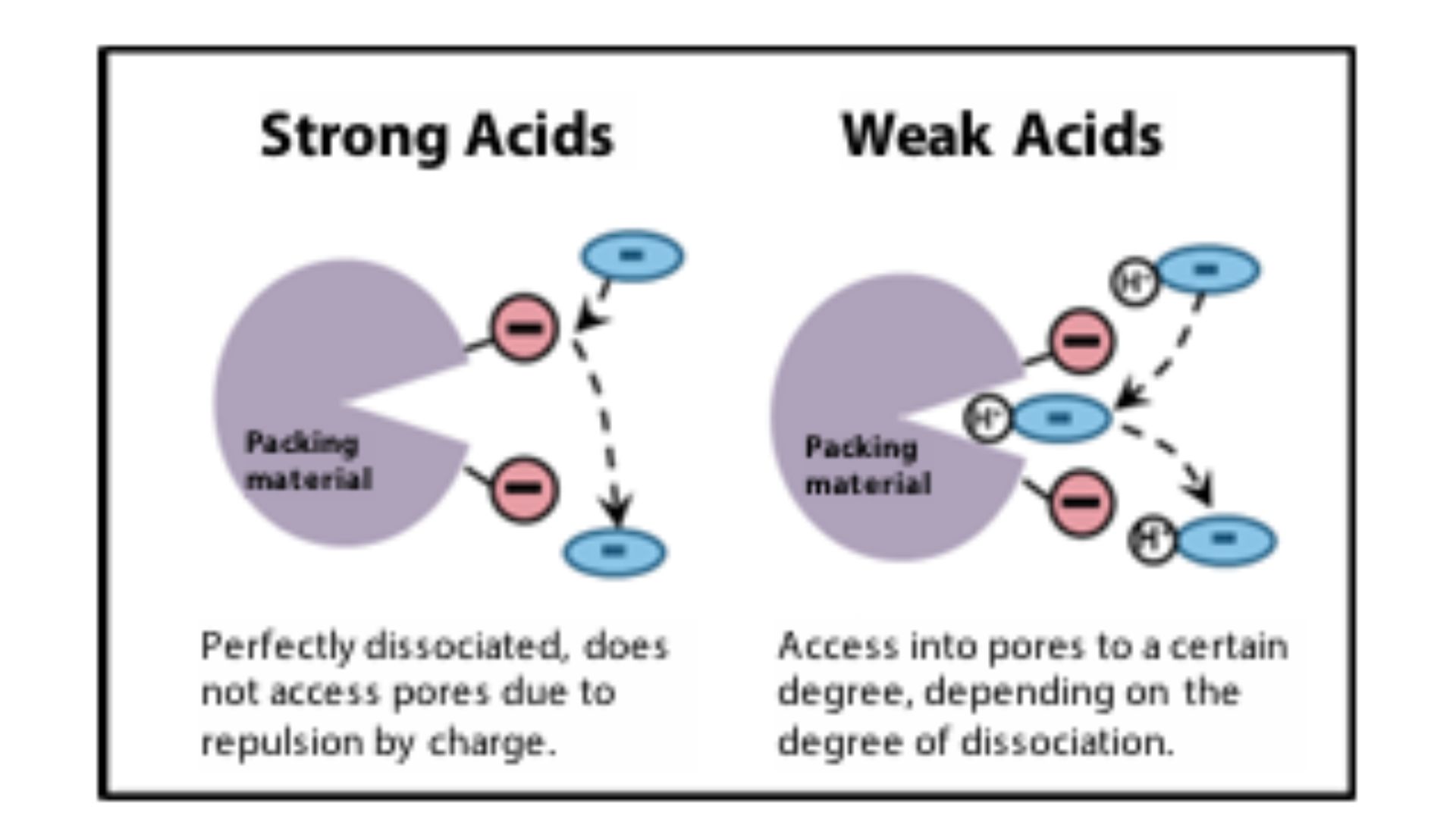
In ion exclusion mode, utilized in organic acid analysis, an H+ cation exchange resin is used as the filling agent. Organic acid, the target component, is separated by the magnitude of Donnan exclusion between the stationary phase surface of the H+ cation exchange group and the mobile phase. In this mode, because of the negative charge on the stationary phase, strong acids experience large electrostatic exclusion and cannot permeate into the filling agent pores. With organic acids and other weak acids, however, the extent of permeation into the pores is determined by the size of this charge, producing a difference (separation) in elution times. Citric acid and lactic acid, which have a large negative charge (small pKa), experience more electrostatic exclusion than acetic acid, and are eluted faster. In principle, organic acids are all eluted up to the elution position for neutral substances (the position at which the pores are completely permeated), with elution ordered from smallest to largest pKa.
Shim-pack SCR-102H column which is suitable for high resolution analysis, and the Shim-pack Fast-OA is suitable for high speed analysis.